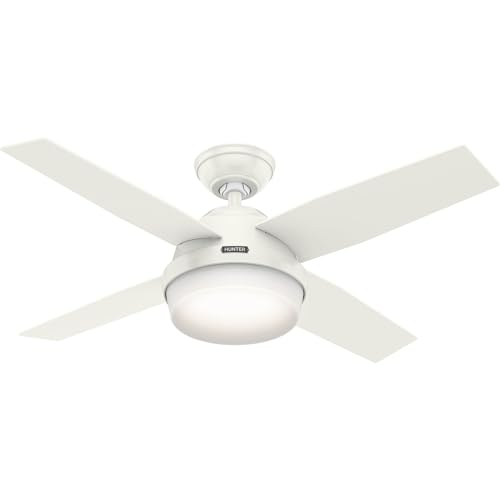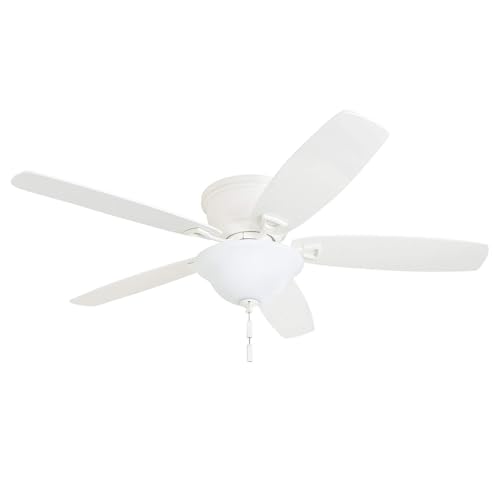

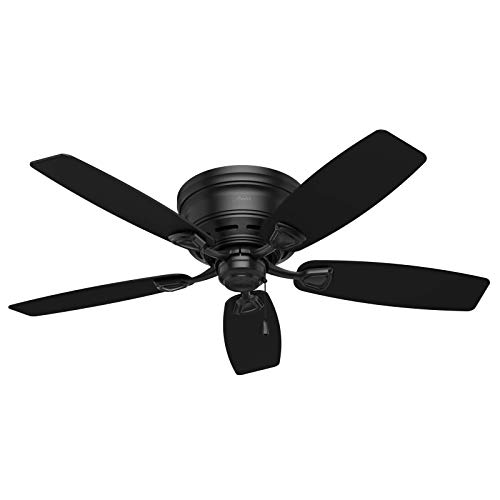

Flush-mount (hugger) fans attach the motor directly against the ceiling for maximum headroom, which suits ceilings 8 feet or lower. Downrod mounting hangs the fan on a metal rod to drop it into the ideal 8-to-9-foot airflow zone, which suits standard and high ceilings. Your ceiling height and airflow needs decide the winner.
What flush mount means
A flush-mount fan, also called a hugger or low-profile fan, bolts the motor housing straight to the ceiling mount with no downrod between them. The blades end up just a few inches below the ceiling. The whole point is headroom: on a low ceiling, this keeps the blades at a safe height while leaving space for people to move underneath comfortably.
The compromise is airflow. With the blades sitting close to the ceiling, the fan cannot draw air in from above as freely, so it moves somewhat less air than the same fan on a downrod.
What downrod mounting means
A downrod is a metal pipe that hangs the fan below the ceiling mount. It drops the motor and blades into the zone where a fan works best, roughly 8 to 9 feet above the floor, and gives the blades room to pull air from above. Downrods come in a range of lengths, so you can tune the drop to your exact ceiling height.
This is the default, best-performing way to hang a fan whenever the ceiling is tall enough to allow it.
Airflow: the main trade-off
The single biggest difference is how much air you feel. A fan needs clearance above the blades to breathe; give it that room and it circulates air efficiently. A flush mount deliberately gives up some of that clearance for headroom, so expect a noticeable, though not drastic, drop in effective airflow compared with the same fan on a downrod. If maximum cooling is the priority and the ceiling allows it, a downrod almost always feels better.
Matching the mount to your ceiling height
- Under 8 feet: flush mount. A downrod would drop the blades below the 7-foot safety minimum.
- 8 feet: flush mount or a very short downrod. Standard 8-foot ceilings are the borderline case; many people use a hugger or a short 3-to-4-inch rod.
- 9 feet: a short downrod (around 6 inches) lands the blades near the ideal height.
- 10 feet and up: a longer downrod, roughly 1 foot of rod per additional foot of ceiling, dropping the blades into the 8-to-9-foot window.
Sloped ceilings
Downrod mounting is also the answer for a sloped or vaulted ceiling. The rod lets the fan hang straight down (plumb) even though the ceiling is angled, and most fans need a sloped-ceiling or angled-ceiling adapter for steeper pitches. A flush mount generally cannot follow a slope, because the motor is meant to sit flat against a level ceiling. Check the fan's maximum rated slope before buying.
Look and clearance
Beyond performance, the two mounts look different. A flush mount reads compact and tucked away, which many people prefer on a modest ceiling. A downrod fan has a more traditional, floating appearance and shows off the motor housing. On low ceilings, the flush mount also simply feels less imposing over your head.
Can you convert between the two?
Often, yes, if the fan is designed for it. Many standard fans ship with a downrod but include a way to mount closer, and some are sold specifically as convertible. However, a true low-profile hugger usually cannot be raised onto a long downrod, and a fan built only for downrod mounting may not have a flush option. Always check the manual before assuming you can switch, and use only the hardware and downrod lengths the manufacturer approves.
Safety notes
Either mount hangs a spinning load overhead, so both must attach to a fan-rated outlet box anchored to framing or a listed brace, never a standard lighting box. Before working, turn off power at the breaker and confirm the wires are dead with a tester. Make sure the downrod's ball-and-socket hanger is fully seated so the fan cannot drop or slip. If the box is not fan-rated, the wiring is questionable, or you are unsure about the framing, hire a licensed electrician. This is general information, not a substitute for one.
The bottom line
Pick a flush mount to protect headroom on low ceilings and accept a small airflow trade-off. Pick a downrod to put the fan in its ideal airflow zone on standard, tall, or sloped ceilings. Measure your ceiling first, land the blades between 8 and 9 feet where you can, and never below 7. Get the mount right and the same motor will feel dramatically more effective in the room.