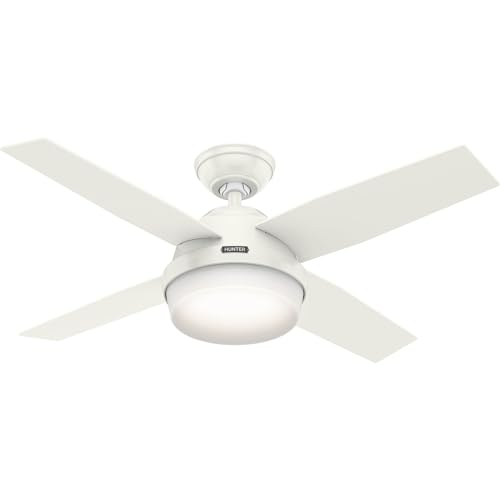
A damp-rated ceiling fan resists humidity and moisture in the air but not direct water, so it belongs in covered, protected spots. A wet-rated fan is fully sealed to take direct rain and hose spray, so it is the only safe choice for open or exposed locations. Using the wrong rating outdoors is a real safety and warranty problem.
The three location ratings
Ceiling fans sold in the US are listed by a safety lab such as UL for a specific location: dry, damp, or wet. The rating describes how much moisture the fan's motor, wiring, and finish are engineered to survive.
Dry rated
A dry-rated (indoor) fan is for conditioned interior spaces only: bedrooms, living rooms, offices. Its motor and finish have no special moisture sealing. Humidity from a shower or an open door can corrode the bearings and windings and rust the hardware, so these fans should never be installed outdoors or in a bathroom that gets steamy.Damp rated
A damp-rated fan is built to handle moisture in the air and occasional condensation, but not water hitting it directly. Think covered porches, screened patios, sunrooms, garages, and bathrooms. The blades resist warping in humidity and the housing resists corrosion, but a wind-driven rain that actually lands on the fan is beyond what it is designed for.Wet rated
A wet-rated fan is sealed and finished to take direct water: rain, snow, and hose-down cleaning. Stainless or specially coated hardware, sealed motor housings, and all-weather blades (often ABS or marine-grade) let it live in fully exposed locations like open pergolas, gazebos without full cover, and beachfront patios.How to tell which one you need
Ask one question: can rain, snow, or spray ever physically reach the fan?
- Fully enclosed, climate-controlled room with any humidity risk, such as a bathroom: damp rated at minimum.
- Covered outdoor area where the fan stays dry even in a storm, like a deep porch with a solid roof and a wall on the weather side: damp rated is usually fine.
- Open or partly exposed area where blowing rain, mist, or spray can land on it: wet rated, no exceptions.
What makes a wet-rated fan different
Wet-rated construction is not just marketing. Typical differences include:
- A sealed motor housing that keeps water off the windings and bearings.
- Corrosion-resistant hardware, often stainless steel screws and coated or powder-finished metal.
- All-weather blades made of ABS plastic or treated material that will not swell, warp, or delaminate the way indoor wood or MDF blades do.
- Gasketed light kits where a light is included.
Why the rating matters
Two reasons: safety and warranty. Water reaching the wiring or motor of an under-rated fan can cause a short, a tripped breaker, or in a bad case an electrical hazard right above where people gather. And installing a fan outside its rated location almost always voids the manufacturer's warranty, so if it corrodes or fails you are on your own.
Because outdoor fans involve mounting to a box and connecting to a circuit, treat the install as electrical work. Turn off power at the breaker, verify the wires are dead, and make sure the outlet box is rated for a fan and for outdoor use. For a new outdoor circuit, a questionable box, or any uncertainty, hire a licensed electrician. This is general information, not a substitute for one.
Reading the label
The rating is printed on the box and on the fan's UL label, usually as "UL Listed for Damp Locations" or "UL Listed for Wet Locations." If a listing only says "indoor" or shows no location wording, treat it as dry rated. Also confirm the light kit carries the same rating as the fan; an indoor kit on a wet-rated fan reintroduces a weak point.
Quick reference
- Dry: indoor only, no moisture exposure.
- Damp: covered and protected, humidity okay, no direct water.
- Wet: fully exposed, direct rain and spray okay.