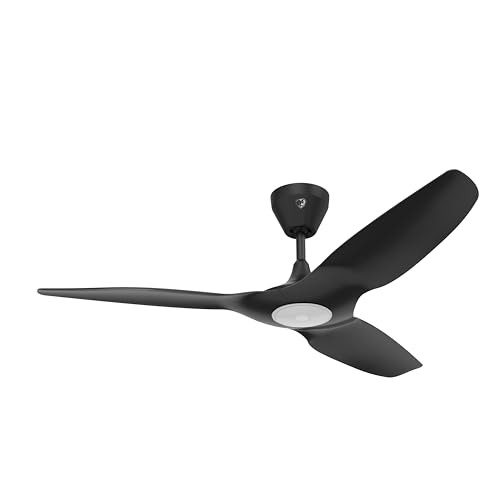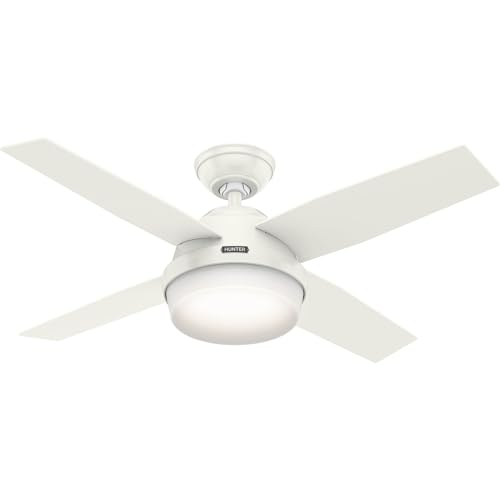

The right downrod length is roughly your ceiling height minus the 8 to 9 feet you want the blades to hang at, minus the fan's own body depth. For a standard 8-foot ceiling, use a flush mount or the shortest rod; for taller ceilings, add about 6 inches of downrod for every foot above 8 feet.
Why blade height drives downrod length
A ceiling fan moves the most air, and feels best on your skin, when the blades sit about 8 to 9 feet above the floor. At that height the blades stay safely above head height while still pushing a usable column of air down into the room. Mount the fan too high and the breeze weakens before it reaches you. Mount it too low and you create clearance and safety problems. So picking a downrod is really just a way of parking the blades in that 8-to-9-foot sweet spot no matter how tall your ceiling is.
The simple downrod formula
Work in inches and use three numbers:
- Ceiling height - for example, 120 inches for a 10-foot ceiling.
- Desired blade height - 96 inches (8 feet) is the common target; 102 to 108 inches gives more headroom in a large room.
- Fan body depth - the distance from the ceiling mount down to the blades, not counting the downrod. It is on the spec sheet and is often 10 to 14 inches.
Example: 120 minus 96 minus 12 equals a 12-inch downrod.
Because fan bodies vary quite a bit, always confirm against the manufacturer's own downrod chart for your specific model. The numbers below are a planning starting point, not a substitute for that chart.
Quick reference by ceiling height
Assuming you want the blades near 8 to 9 feet and an average-depth fan:
- 8 ft: no downrod - use a flush (hugger) mount
- 9 ft: 6-inch downrod
- 10 ft: 12-inch downrod
- 11 ft: 18-inch downrod
- 12 ft: 24-inch downrod
- 14 ft: 36-inch downrod
- 16 ft: 48 to 60-inch downrod
- 18 to 20 ft: 60 to 72-inch downrod
Low ceilings under 8 feet
If your ceiling is under 8 feet, skip the downrod entirely and choose a flush-mount (also called hugger or low-profile) fan that bolts tight to the ceiling. You will lose a little airflow efficiency compared with a downrod fan, because the blades sit closer to the ceiling, but you keep the blades safely above head height. Aim to keep the lowest point of the blades at least 7 feet off the floor.
Sloped and vaulted ceilings
Angled ceilings need two things: a downrod long enough that the blades clear the low side of the slope, and a sloped-ceiling adapter (an angled canopy or ball mount) rated for your ceiling's pitch. Standard canopies only handle a few degrees. Steeper vaults need both a longer rod and a high-angle mount, so check the fan's maximum rated slope before you buy.
Do not forget minimum clearances
Two clearances decide whether a given downrod is safe:
- The lowest point of the blades should be at least 7 feet above the floor.
- The blade tips need roughly 18 inches of clearance from the nearest wall or sloped ceiling, and at least 8 to 10 inches between the blades and a flat ceiling for airflow.
Matching the rod diameter and finish
Downrods are not universal. Confirm the rod's outside diameter (commonly 3/4 inch on many residential fans, but larger on heavy or commercial-grade fans), the pin and screw pattern, and that the internal wires are long enough to reach through the new length. Buying the rod made for your exact fan avoids wobble and warranty issues, and it will match the finish of the motor housing.
Safety note
Downrod swaps involve the fan's mounting and wiring. Turn the power off at the breaker before you touch the fan - not just the wall switch. Confirm the ceiling box is a fan-rated box that can support a moving load. If you are adding a new circuit, running new wiring, or you are unsure about any connection, hire a licensed electrician. This article is general information, not a substitute for professional electrical work or your fan's installation manual.