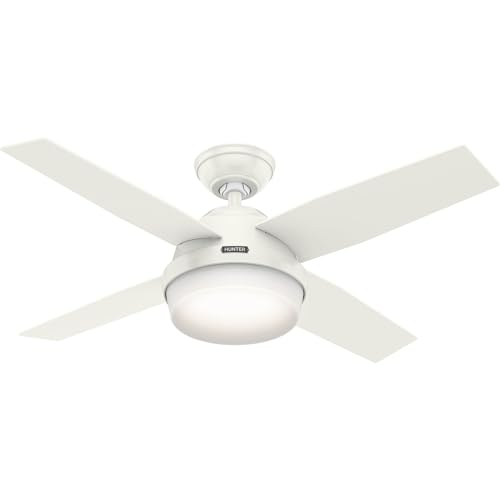


Are DC-Motor Ceiling Fans Worth It?
For the majority of homeowners, a DC-motor ceiling fan is worth the extra upfront cost.
The value comes down to three measurable benefits: lower energy use, quieter operation,
and finer speed control — weighed against a real but modest price premium.
The Energy Case
A typical DC ceiling fan draws roughly 6-25 watts on medium-high speed, compared to
50-90+ watts for an AC fan producing similar airflow. Run a fan 8 hours a day, and that
difference adds up over a cooling season, particularly if you're running multiple fans
throughout the house. ENERGY STAR-certified ceiling fans (many of which use DC motors)
are estimated by the U.S. Department of Energy and ENERGY STAR program to move air about
20% more efficiently on average than conventional models, which is where the real
month-to-month savings come from rather than any single spec number.
The Noise Case
DC motors are mechanically simpler to keep quiet because they lose less energy to
electrical inefficiency, which is what usually shows up as motor hum or vibration in AC
fans. Most fans that test under 1-2 sones on the market today use DC motors. If a quiet
bedroom or home office is the priority, DC is close to a requirement, not just a nice
extra.
The Control Case
Because a DC motor is driven by a control board rather than a simple switch, DC fans
typically offer six speed settings instead of the three common on AC fans. That extra
range matters in practice — instead of choosing between "too slow" and "too fast," you can
dial in exactly enough airflow, which also means running the fan more efficiently and
quietly on a day-to-day basis.
The Cost Case
DC motors add real cost: expect to pay roughly $50-150 more for a DC fan than a similarly
sized AC fan from the same brand tier. Premium DC brands with smart-home integration cost
more still. If you're outfitting a room you use for a few hours a week — a guest bedroom,
a rarely used den — the payback period stretches out, and a well-reviewed AC fan may be the
more practical choice.
Who Should Consider Sticking with AC
- Garages, workshops, and utility spaces where noise and efficiency are lower priorities
- Rental properties or short-hold homes where the owner won't be there long enough to
- Budget-constrained full-home retrofits where a large number of fans need replacing at
Who Should Choose DC
- Bedrooms, nurseries, and home offices where quiet operation matters
- Rooms where the fan runs for long stretches daily (living rooms, primary bedrooms),
- Anyone adding smart home or voice control, since nearly all smart ceiling fans use DC
Installation Note
Switching from an AC fan to a DC fan uses the same basic wiring in most homes, but always
confirm the existing electrical box is rated to support a ceiling fan's weight and motion
before mounting a new one, and turn off power at the breaker before doing any
electrical work. If you're unsure about the box rating or need to add a dedicated switch
leg, hire a licensed electrician rather than guessing.