


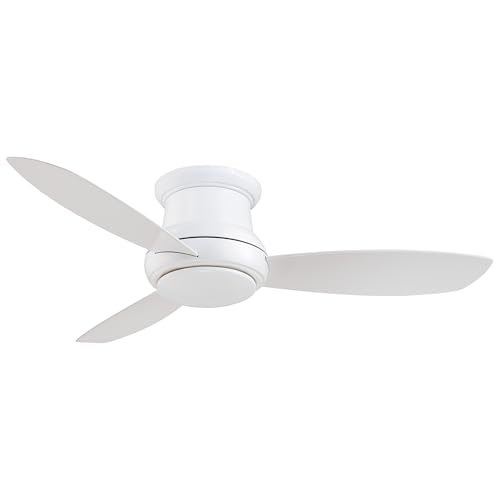


Yes -- a fan can be too big for the room
A ceiling fan can be too big for a room. When the blade span is oversized for the floor area, the fan moves too much air across a small space, creates a wind-tunnel feel, crowds the room visually, and may hang too close to walls, doors, or furniture. Matching blade span to square footage keeps airflow comfortable.
Oversizing is a real mistake, not just an aesthetic one. Below are the limits that matter and how to stay inside them.
How blade span relates to room size
The standard starting point is floor area. Measure the room in feet, multiply length by width, and use that square-footage figure to pick a blade span (the full diameter of the blade circle):
- Up to 75 sq ft (bathrooms, small offices): 29-36 inch fans
- 76-144 sq ft (bedrooms, kitchens): 36-44 inch fans
- 145-225 sq ft (living rooms, primary bedrooms): 44-54 inch fans
- 226-400 sq ft (large rooms): 50-60 inch fans
- Over 400 sq ft: 60 inch and up, or two fans
The clearance limits that cap fan size
Even if the square footage suggests a bigger fan, physical clearances can cap it:
- Blade-tip to wall: keep at least 18-24 inches between the blade tips and the nearest wall or tall furniture. In a narrow room, this is often what forces a smaller span.
- Floor to blade: blades should sit 7-9 feet above the floor. Under 7 feet is both a head-clearance hazard and a code concern; most areas require at least 7 feet.
- Ceiling to blade: allow 8-10 inches between the blades and the ceiling so the fan can pull air. Low ceilings need a flush (hugger) mount, which slightly reduces airflow.
What actually goes wrong when a fan is too big
- Too much airflow. A high-CFM fan in a small room makes papers flutter and feels drafty even on low speed.
- Cramped clearances. Blade tips near a wall look awkward and can catch curtains or an open door.
- Visual imbalance. An oversized fan makes the ceiling feel lower and the room feel smaller.
- Wobble sensitivity. A large fan on an undersized or poorly braced box is more prone to visible wobble.
Can you undersize instead?
Undersizing has its own downside: a fan that is too small runs at high speed to move enough air, which is noisier and still may not reach the corners. If you are between two sizes, most rooms do better rounding up slightly -- but only if clearances allow. The goal is the largest fan that keeps 18-24 inches of wall clearance and 7-plus feet of floor clearance.
Ceiling height matters as much as area
A tall ceiling changes the answer. In a room with a 10-12 foot ceiling, a downrod lowers the fan into the living zone, and a larger span often looks and performs better. In a room with an 8-foot ceiling, you are limited by the flush-mount clearance and should not oversize. Two rooms with identical floor area can call for different fans purely because of ceiling height.
Great rooms and open plans
In large open-concept spaces, a single huge fan is not always the fix. Airflow drops off with distance, so one 60-inch fan may cool the center while the edges stay still. Two properly sized fans, spaced apart, usually beat one oversized unit and avoid the wind-tunnel effect directly beneath a giant fan.
A quick way to check yourself
Safety note
Swapping a fan means working with the ceiling box and wiring. Turn off power at the breaker before you touch anything, confirm the box is fan-rated for the fan's weight, and hire a licensed electrician for any hardwiring, a new circuit, or if you are unsure. This site offers general information, not a substitute for a licensed electrician.
Bottom line: a fan can be too big when it breaks clearance limits or overpowers a small room. Size to the floor area, then let clearances have the final say.


