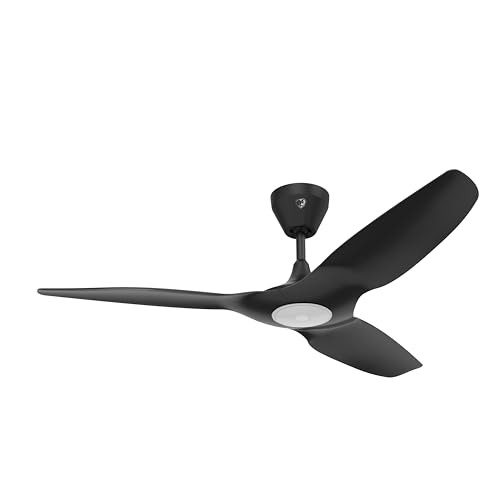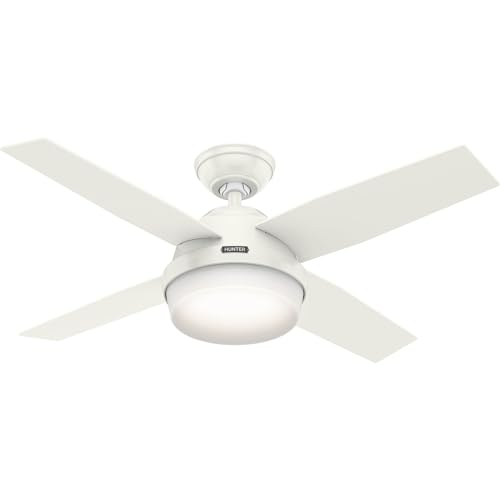

A ceiling fan hums or buzzes when electrical vibration reaches a loose part, or when the wall control is not compatible with the motor. The most common causes are a dimmer or speed control the motor was never designed for, loose components rattling in sympathy with the motor, or worn bearings. Matching the control to the fan and tightening parts usually silences it.
What the noise is telling you
A faint electrical hum from any motor is normal up close, but a hum you can hear across the room, or a buzz that changes with fan speed, signals something you can usually fix. Pay attention to when the noise happens: only at certain speeds, only with the light on, only when dimmed, or all the time. That pattern points straight at the cause.
Cause 1: The wrong wall control or dimmer
This is the single most common source of ceiling fan buzz.
- A standard light dimmer must never be used to control a fan motor. Dimmers chop the electrical waveform to reduce voltage, and an AC fan motor reacts to that chopped signal with an audible buzz - and it can overheat the motor over time. Replace it with a proper fan speed control, or the control made for your fan.
- Some fans, especially those with a remote receiver, only run cleanly on full power at the wall with speed set by the remote or pull chain. Putting any dimmer or generic speed control upstream of that receiver can cause humming.
- If you recently changed a wall switch and the buzz started, that new control is the prime suspect.
Cause 2: Loose parts vibrating
The motor's normal vibration finds anything loose and turns it into noise.
- Tighten the screws holding the blades, blade irons, light kit, and shades.
- Check the downrod set screws and the canopy at the ceiling.
- Make sure glass shades sit in their gaskets and their retaining screws are firm - a loose shade produces a surprisingly loud buzz.
Cause 3: Dirty or failing motor bearings
An older fan that hums constantly and may run warm can have dry or worn bearings. Sealed motors are not designed to be re-oiled, but you can:
- Clean dust from the motor housing vents so it runs cooler.
- Listen for a grinding or cyclic noise, which indicates bearing wear rather than a pure electrical hum.
Cause 4: The light kit and bulbs
If the hum only happens with the light on, the light circuit is the cause, not the motor.
- A non-dimmable LED bulb on a dimmer commonly buzzes. Swap in bulbs labeled dimmable, and use a dimmer rated for LEDs.
- A loose bulb, or a bulb wattage above the fixture's rating, can also buzz. Seat bulbs firmly and stay within the fixture's stated maximum.
Cause 5: A brand-new fan
A new fan sometimes makes a faint hum for the first day or two as the motor settles, and remotes occasionally pick up interference. Give it a short break-in period, make sure the remote's dip switches or pairing are set correctly, and confirm nothing was left loose during installation before assuming a fault.
Quieter by design
If noise is a deal-breaker - in a bedroom or nursery, for example - a DC-motor fan runs noticeably quieter than a traditional AC fan and uses less energy. DC fans come with their own matched remote or control, which also sidesteps the dimmer-compatibility problem entirely, since you should only ever use the control the manufacturer supplies.
Safety note
Diagnosing a hum often means changing a wall control or working near wiring. Turn the power off at the breaker before replacing any switch or opening the fan canopy, and never wire a standard light dimmer to a fan motor. If new wiring or a new circuit is involved, or you are unsure which control is safe for your fan, hire a licensed electrician. This is general information, not a substitute for a licensed pro or your fan's manual.