
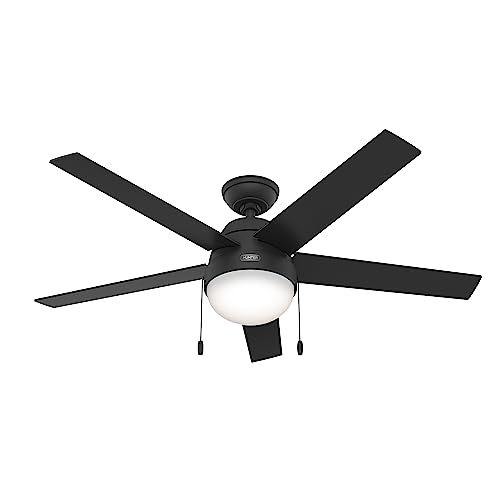


A universal ceiling fan remote will work with most fans, but not all. It works when your fan can accept an add-on radio receiver in the canopy and runs on a standard AC motor. It usually will not work with fans that have a sealed proprietary receiver, a DC motor controller, or an integrated smart module.
What "universal" actually means
A universal remote kit is really two parts: a handset and a small radio receiver you wire into the fan's canopy between the house wiring and the fan. The handset speaks to that included receiver, not to your fan directly. So "universal" describes the receiver's ability to control a generic AC fan and light, not a magic ability to talk to any remote already installed.
That distinction matters. If a fan already has its own captive receiver, a universal kit does not learn or replace it. You are swapping in the new receiver instead.
When a universal remote will work
Universal kits are a good match when:
- The fan uses a standard AC motor with pull chains or a simple wall switch.
- There is room in the canopy to fit the receiver module (this is the most common physical limitation).
- The fan and light draw within the kit's rated load, listed in watts or amps for the fan and for the light circuit.
- You can access the wiring to splice the receiver in line.
When it probably will not work
- DC-motor fans. These use a specialized controller and low-voltage signaling. A generic AC receiver cannot drive them, and forcing one can damage the motor. DC fans need the maker's own remote or a compatible replacement.
- Fans with a sealed, integrated receiver. Many newer fans build the receiver into the motor housing with no room and no easy splice point.
- Smart or Wi-Fi fans. These expect their own app-linked module.
- Very tight canopies. Even a compatible AC fan can defeat a kit if the module simply will not fit.
How to check compatibility before buying
Match these specs rather than guessing:
- Motor type - AC or DC. Check the manual or the motor label.
- Load ratings - compare the kit's maximum fan-motor rating and light-fixture wattage against your fan.
- Frequency and dimming - if you want to dim an LED light, confirm the receiver supports dimming and that your bulbs are dimmable.
- Canopy space - measure the gap between the mounting bracket and the ceiling.
A note on replacing an existing remote
If you only lost the handset, you often do not need a full universal kit. Many fans pair to a matching replacement handset, especially dip-switch models where any compatible handset set to the same code will work. Try a like-for-like replacement first; it is cheaper and keeps the fan's original receiver and any DC support intact.
Installation and safety
Fitting a universal receiver is hardwiring work inside the canopy:
Because this involves line-voltage connections, treat it seriously. If the wiring is unfamiliar, the box is crowded, or anything looks damaged, hire a licensed electrician. This article is general information, not a substitute for a licensed electrician.
Wall-mount versus handheld options
Universal kits come in two handset styles, and both work with the same in-canopy receiver. A handheld remote is convenient but easy to misplace. A wall-mount version drops into a switch box or clips to a bracket so it stays put and looks like a permanent control. Some kits include both. If you go wall-mount, remember the receiver still needs constant power at the fan, so the existing wall switch that feeds the fan should stay in the on position or be replaced with an always-hot connection.
The honest bottom line
A universal remote is a flexible, affordable upgrade for a standard AC fan with a roomy canopy. It is the wrong tool for a DC-motor fan, a smart fan, or a fan with a sealed receiver. Confirm motor type, load ratings, and canopy space first, and you will avoid the most common reason these kits get returned: they simply were not compatible with that particular fan. When in doubt, check the fan's own manual, which usually states whether an add-on receiver is supported.


